Mosquito Life Cycle
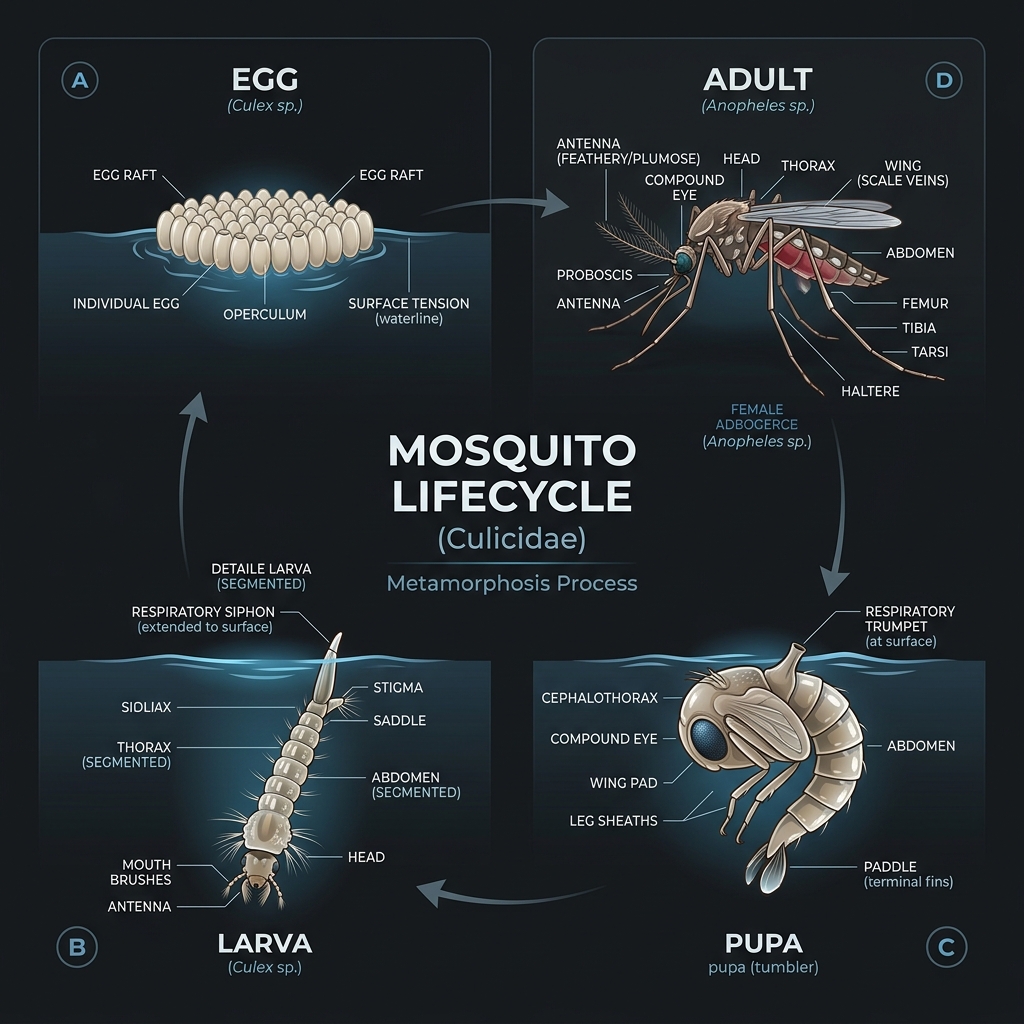
Mosquitoes undergo complete metamorphosis, passing through four distinct stages: Egg, Larva, Pupa, and Adult. Learn about each development phase.
Egg
Laid individually or in floating rafts. Eggs require water to hatch, though some can remain dormant in dry soil for months.
Larva
Often called 'wrigglers'. Live in water and breathe air through siphons. They feed on organic matter and shed skin four times.
Pupa
Often called 'tumblers'. A non-feeding stage where the mosquito transforms into an adult. Similar to a butterfly cocoon.
Adult
Emerges onto the water surface, rests until wings dry, and flies off. Only females feed on blood to develop eggs.
How Long Does a Mosquito Live?
A mosquito's lifespan varies significantly depending on its sex, species, temperature, humidity, and environmental conditions. There is no single universal lifespan number. Under optimal natural conditions, male mosquitoes live for only about 7 to 10 days, feeding strictly on flower nectar and plant sap.
In contrast, adult female mosquitoes have a much longer lifespan, typically surviving between 2 to 4 weeks, though some species that overwinter can live forseveral months. Females require blood meals to obtain proteins needed for their eggs, which they deposit in stagnant pools where mosquito larvae develop. Ambient temperature and humidity directly dictate how fast they age; higher humidity increases survival rates, while dry climates drastically shorten their life cycle.