Mosquito Bite Guide
Understand standard bite symptoms, identify systemic allergic reactions, apply clinically backed remedies, and recognize warning signs of infection.
Standard Reaction
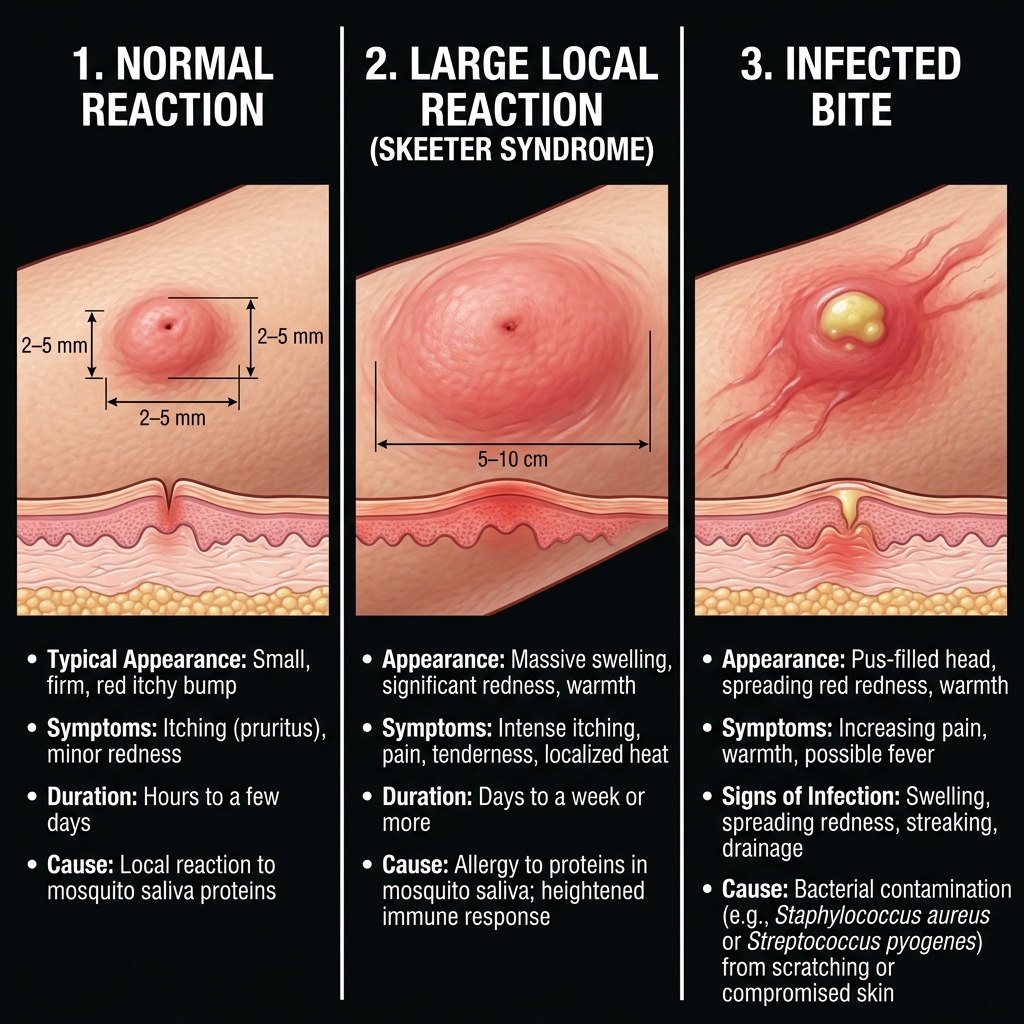
A small, puffy, white or red bump appearing minutes after the bite. It becomes firm, itchy, and slightly swollen over 24-48 hours.
Skeeter Syndrome
An inflammatory allergic reaction to mosquito saliva proteins. Causes extreme swelling, redness, warmth, and blistering near the bite.
Infection / Vector
Signs of secondary bacterial infection (pus, red streaks, fever) or systemic virus transmission (joint pain, headache, fatigue).
Step-by-Step Treatment
1. Clean the Site: Immediately wash the bite area with soap and cold water to remove residual saliva proteins and reduce infection risk.
2. Reduce Inflammatory Heat: Apply an ice pack or a cold, damp cloth to the bite for 10 minutes. This constricts local blood vessels and dampens itching impulses.
3. Apply Topical Relief: Apply an over-the-counter 1% hydrocortisone cream or calamine lotion. For intense itching, a baking soda paste (1 tablespoon baking soda mixed with water) can neutralize localized acidity.
4. Administer Antihistamines: If experiencing multiple bites or a hypersensitive allergic reaction, an oral antihistamine (such as cetirizine or diphenhydramine) can provide systemic relief.
When to Seek Professional Medical Care
Most mosquito bites heal within a few days. However, seek immediate medical attention if you experience:
- Fever, severe headache, joint pain, or confusion within 2 weeks of being bitten (warning signs of vector-borne illnesses).
- Red streaks spreading from the bite, increasing warmth, or oozing pus (indicates a bacterial infection requiring antibiotics).
- Difficulty breathing, swelling of the throat or tongue, or hives (anaphylactic emergency).
Frequently Asked Questions
Why do mosquito bites itch?
When a female mosquito bites, she injects saliva containing anticoagulants and proteins. Your immune system releases histamine to combat these foreign salivary proteins, triggering localized blood vessel dilation, inflammation, and the sensation of itching.
How long do mosquito bites last?
For most individuals, a standard mosquito bite peaks in swelling and itchiness within 24 to 48 hours. The localized irritation typically resolves completely within 3 to 7 days, though scratching can prolong recovery.
What do mosquito bites look like?
A standard bite appears as a raised, puffy, round skin bump that is red or pale pink. Over a day or two, it hardens into a small, firm, reddish-brown bump, occasionally with a tiny central dot.
How can you stop mosquito bites from itching?
To stop the itch, wash the area immediately with soap and water to clear residual saliva. Apply a cold compress or ice pack for 10 minutes to numb local nerve pathways, and avoid scratching to prevent secondary infection.
What can you put on a mosquito bite?
Applying over-the-counter 1% hydrocortisone cream or calamine lotion is clinically proven to reduce swelling and itching. Alternatively, a paste made of baking soda and water can help soothe minor localized skin irritation.
When should you worry about a mosquito bite?
Seek medical attention immediately if you develop systemic symptoms like fever, severe headache, joint pain, confusion, or a body rash within two weeks of a bite. Watch for signs of local infection such as spreading red streaks, worsening warmth, or oozing pus.
Can you be allergic to mosquito bites?
Yes. A severe localized allergic reaction to mosquito saliva proteins is known as Skeeter Syndrome. It manifests as extreme swelling, heat, blisters, and redness. While painful, it is distinct from systemic anaphylaxis and is managed with oral antihistamines.
How are mosquito bites treated?
Standard treatment involves keeping the bite clean, applying topical anti-itch creams (calamine or hydrocortisone), and taking oral over-the-counter antihistamines if multiple bites cause generalized body itching.
Can mosquito bites become infected?
Yes. Scratching breaks the skin barrier, allowing bacteria (like Staphylococcus or Streptococcus) from your hands to enter. Signs of secondary bacterial infection include localized heat, red streaks, increased swelling, and pus oozing from the bite.
How can mosquito bites be prevented?
Prevent bites by using EPA-registered insect repellents containing DEET, Picaridin, or Oil of Lemon Eucalyptus (OLE). Wear loose, light-colored long sleeves and pants, and install mesh screens on windows and doors.
Do mosquitoes prefer certain blood types?
Multiple scientific studies suggest that mosquitoes are more attracted to individuals with Type O blood than Type A or B. However, other factors like carbon dioxide output, body temperature, sweat chemicals, and skin microbiota play a larger role in host attraction.
How many mosquito bites is dangerous?
There is no single universal number of mosquito bites that is considered dangerous, as the health risk depends entirely on individual context. For most people, receiving multiple bites causes only localized itching and swelling. However, danger arises from systemic factors: severe allergic reactions (such as anaphylaxis or extreme Skeeter Syndrome), secondary bacterial infections from scratching, exposure to vector-borne pathogens (like malaria or dengue), or the age and health status of the individual. Infants, the elderly, and immunocompromised individuals are at a higher risk of complications from mosquito-borne illnesses.
How do you get rid of mosquito bites?
You cannot make a mosquito bite disappear instantly, but you can speed up healing and stop the itching by washing the bite with soap and water, applying a cold compress or ice pack for 10 minutes to reduce inflammation, and using an over-the-counter 1% hydrocortisone cream or calamine lotion. Taking oral antihistamines can also soothe severe body itching. Avoid scratching, as it causes skin tears that introduce bacteria, increasing the risk of infection and scarring.